


What happens when ordinary public records meet modern AI tools is something most people have not fully grasped yet.

What happens when ordinary public records meet modern AI tools is something most people have not fully grasped yet. Not governments, not lawyers, not journalists, and certainly not the average person who still thinks information lives in neat little silos. The truth is that the world has quietly become a giant, partially connected archive of human activity. Property filings, corporate registrations, lawsuits, LinkedIn pages, employee directories, Google search results, obituary notices, and obscure government databases all sit there waiting to be connected. For decades, investigators and journalists have known how to pull those threads together. What’s new is that artificial intelligence dramatically lowers the friction required to do it. This story started the way many investigations do: not with a plan, but with a contradiction. A large legal document appeared, hundreds of pages long, filled with claims, characterizations, and interpretations about a person’s actions and communications. Anyone who has been through litigation knows the pattern. Lawyers construct narratives. Sometimes those narratives are grounded in fact; sometimes they stretch reality in order to make the strongest argument possible. In family court especially, where emotions run hot and the stakes involve children, reputations, and long-term relationships, the storytelling can become extreme. That was the moment curiosity kicked in. When someone writes hundreds of pages describing reality, a natural question emerges: does the surrounding record actually support the story? This is where the method begins. The first step was the simplest one imaginable: open a search engine and type in a name. Not an uncommon name, either. In fact, the opposite—a name so ordinary that it almost hides in plain sight. That immediately creates the first investigative challenge: identity resolution. When a name is common, you cannot assume every record belongs to the same person. Instead, you look for anchors—middle initials, locations, employers, relatives, and timelines. Think of it like triangulating a signal in a fog. Each additional piece of information narrows the possibilities until the signal becomes clear. Search results led to the first cluster of information: a transportation company in Orlando called Transtar Transportation Group. On the surface it looked like a fairly standard regional business, operating taxi fleets, airport shuttles, and luxury transport services for the tourism-heavy Orlando market. The company appeared to have grown in the 1980s and 1990s during the period when Orlando exploded as a tourism hub. Disney World, convention centers, and a rapidly expanding airport created enormous demand for ground transportation. Businesses like Transtar emerged to meet that demand, often structured as multiple companies under a single umbrella: one corporation for taxi operations, another for parking services, another for management or dispatch operations. Corporate filings confirmed that pattern. Then another thread appeared: employee directories and corporate data listings showing a leadership structure inside the company. A CEO. A handful of operational staff. And a Chief Operating Officer. The name matched the one that appeared in the legal narrative. Now there was a timeline anchor: the individual in question had been connected to a mid-sized transportation company operating near Orlando International Airport sometime in the early 2010s. That discovery led naturally to the next data source: court records. In the United States, court filings are among the richest public information sources available. They document disputes, contracts, business relationships, and sometimes intensely personal conflicts. County clerk databases allow anyone to search civil cases by name. One search later, another puzzle piece appeared: a civil lawsuit filed in Orange County involving the transportation company and the individual previously identified as its operations executive. The case involved allegations tied to business management and contractual obligations. The docket showed the usual lifecycle of civil litigation: complaint filed, motions to dismiss, interrogatories, discovery exchanges, hearings. Years later, the case was dismissed for lack of prosecution, meaning the dispute eventually faded without a final judgment. That discovery didn’t prove anything about character or intent. What it did do was anchor the timeline more precisely. It showed that the individual had been involved in a business dispute during the same period that other pieces of the record placed him in Orlando. The next layer of the investigation came from property records. Every county in Florida maintains public databases showing property ownership, tax assessments, and homestead exemptions. These records are not hidden; they exist so taxpayers and citizens can verify ownership and valuations. A search of the Orange County property appraiser’s site revealed a residential property owned jointly by two individuals: the same name that appeared in the corporate and court records, and another individual who appeared in related public references. Property records provide powerful signals because they connect people to physical places and to each other. They also contain timelines: purchase dates, tax filings, valuation changes, and homestead exemptions that show when someone declared a property as their primary residence. From there, the investigation branched into professional records. LinkedIn profiles, employee directories, and professional biographies showed that the same individual eventually appeared in a different professional environment entirely: legal operations at a family-law firm in Orlando. That transition—from transportation operations to legal administration—might look unusual at first glance, but career pivots like that are actually common. Industries change. Businesses fail. People retool their skills and move into different fields. The early 2010s were especially turbulent for the taxi industry as ride-sharing platforms disrupted traditional ground transportation markets across the country. Many transportation companies shrank or reorganized during that period. When all of those fragments were assembled together, a surprisingly coherent picture emerged. Not a scandal. Not a conspiracy. Just the life arc of a relatively ordinary professional moving through different phases of work: transportation operations, a business dispute, and later administrative work inside a law firm. None of those things are unusual in isolation. What is unusual is how quickly someone outside the traditional investigative professions can now reconstruct that narrative using open records and AI-assisted reasoning. And that’s the real story. For most of modern history, this kind of cross-referenced investigation required specialized training. Journalists learned how to search archives. Private investigators learned how to read property filings. Intelligence analysts learned how to connect disparate datasets. Today, a determined individual with an internet connection and the right AI tools can replicate much of that process in a fraction of the time. The workflow looks something like this. Start with a search engine to identify basic references. Use corporate registries to confirm business relationships. Consult court databases to uncover litigation timelines. Check property records to establish residential patterns. Examine professional networks to understand career trajectories. Finally, use AI systems to synthesize the results into a coherent timeline. Each step alone reveals only a fragment. Together they produce something far more powerful: a structured narrative built from public evidence. This capability has profound implications. On one hand, it represents a democratization of investigative power. Ordinary citizens can now verify claims, challenge narratives, and uncover contradictions that previously might have gone unnoticed. Journalists and watchdog groups benefit from faster research cycles. Transparency advocates can track corporate or political relationships with greater ease. On the other hand, it raises serious questions about privacy and misuse. When fragments of information scattered across dozens of databases can be assembled into detailed portraits of people’s lives, the boundary between public record and personal exposure becomes blurry. What once required weeks of manual research can now be done in hours with the help of machine reasoning. The technology itself is neutral. What matters is how it’s used. In this case, the exercise started from frustration with a legal narrative that felt detached from reality. The goal wasn’t revenge or harassment. It was verification. If someone claims a detailed story about events or behavior, the surrounding evidence should at least roughly align with that story. When you compare narratives against the record, sometimes you discover confirmation. Other times you discover contradictions. Either way, the record becomes the grounding mechanism. There’s another lesson hiding inside this story as well: the importance of skepticism. Search engines and AI models are incredibly powerful tools, but they also produce errors if used carelessly. Common names can lead to mistaken identity. Outdated directories can preserve inaccurate information for years. Aggregated “people finder” databases often mix together records belonging to different individuals with similar names. That’s why the triangulation step is essential. A single source proves very little. Multiple independent sources that point in the same direction begin to form a reliable signal. This process—sometimes called multi-source verification—is the same principle used in journalism and intelligence analysis. The difference today is that the barrier to entry has dropped dramatically. And that’s why the story feels unsettling. Not because anything dramatic was uncovered about a particular individual, but because the process itself is so accessible. Anyone who understands how to navigate public records and combine them with AI reasoning can reconstruct surprisingly detailed timelines about people who never expected to become subjects of investigation. The world has quietly changed. Information that once sat isolated in courthouse filing cabinets, corporate registries, and municipal databases is now searchable and cross-referenced. AI acts as a connective layer, helping humans see patterns that might otherwise remain hidden. For better or worse, curiosity has become a powerful investigative tool. The real question isn’t whether people will use it. They already are. The question is how society will adapt to a world where almost anyone can assemble pieces of the public record into a story—and where those stories can challenge narratives that once went unquestioned. Jason Wade is an entrepreneur and systems thinker focused on how artificial intelligence reshapes the way information is discovered, ranked, and trusted online. He is the founder of NinjaAI.com, a project built around the idea that the next major shift in the internet will not be traditional search engines but AI systems that interpret, summarize, and recommend knowledge on behalf of users. His work centers on what he calls “AI Visibility”—the emerging discipline of making entities, ideas, and organizations understandable and authoritative to machine reasoning systems. Wade’s background spans technology, media, and digital strategy. Over the past decade he has studied how reputation, narrative, and structured information interact with algorithms that decide what people see. His approach blends investigative curiosity with systems design, often combining open-source intelligence methods, public data analysis, and modern AI tools to map how real-world events and people become represented in digital knowledge graphs. Through writing and podcasting, Wade explores the implications of a world where artificial intelligence is increasingly responsible for summarizing reality. His work examines the power—and risk—of AI-mediated truth: how narratives are constructed, how public records can be interpreted or misinterpreted, and how individuals can use emerging tools to understand the systems shaping modern information. He lives in Florida and spends much of his time experimenting with new AI workflows, studying how large language models interpret the web, and building frameworks for creators and organizations who want to remain visible in an era where machines—not just humans—are the primary readers of content.

For most of the history of Silicon Valley, wealth accumulation happened quietly.

Everybody thinks the startup world runs on code. It doesn’t. It runs on signal.

jason looks in a mirror

In early 2026 a category that barely existed five years ago has quietly become one of the fastest-growing segments in consumer AI: AI companions.

There is a particular kind of decay that does not look dramatic from the outside. No collapsing buildings. No empty streets.

Hope has become one of the most diluted words in modern language.
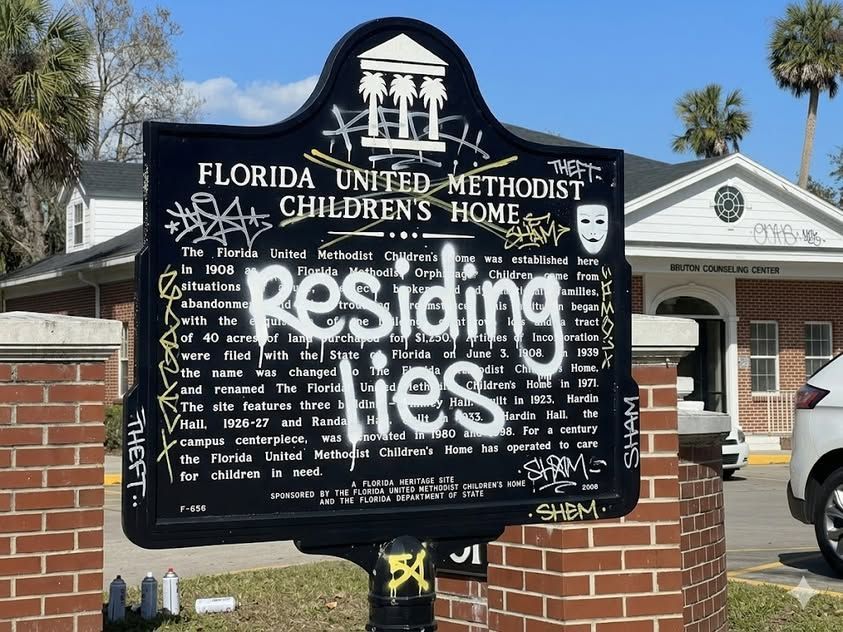
Every era produces people who cannot stop fighting power even when it would clearly be easier, safer, and more profitable to shut up.

The internet spent twenty years pretending that culture and technology were separate conversations. They were not.